
Transparency International (TI) has recently highlighted how weak anti-corruption safeguards, poor enforcement and democratic backsliding are leaving European institutions exposed to undue influence, political corruption and foreign interference, as part of a European Commission-funded project on corruption risks in the EU.
Drawing on its analysis of eight countries – including Ireland – against the European Commission’s annual Rule of Law Reports, TI encourages ambitious implementation of the new EU Anti-Corruption Directive.
Key findings of TI’s cross-country research include:
- Anti-corruption is a core defence mechanism for democracy and democratic resilience.
- Many countries have laws on paper but face weak implementation and lack enforcement.
- Transposition of the EU Anti-Corruption Directive is a major opportunity for stronger national-level reforms.
- Gaps in the regulation and transparency of political finance, lobbying, ‘revolving doors’ and asset declarations continue to present major integrity challenges.
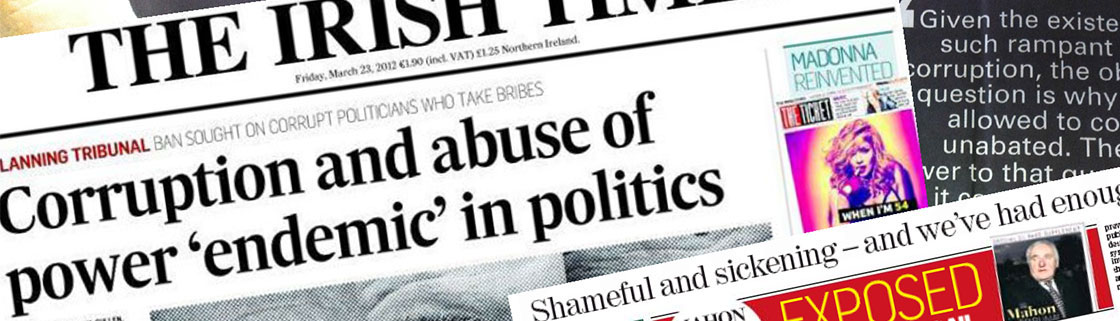
For Ireland, TI’s analysis highlights the pressing need for an overhauled, modernised and robust public ethics framework. The long history of unfulfilled promises of public ethics reform arguably illustrates the level of priority that successive Governments have attached to this issue. Substantive reform was:
- Promised by the Government of the day in response to the final report of the Tribunal of Inquiry into Certain Planning Matters and Payments (known as the ‘Mahon Tribunal’) in 2012.
- Proposed in the Public Sector Standards Bill, which was introduced in 2015 but never progressed beyond second stage and was allowed to lapse with the dissolution of the 32nd Dáil in 2020.
- Recommended by two Government-commissioned reviews – the 2020 Review of Structures and Strategies to Prevent, Investigate and Penalise Economic Crime and Corruption (known as the ‘Hamilton Review’) and the 2022 Review of Ireland’s Statutory Framework for Ethics in Public Office.
- Recommended repeatedly by the European Commission in its annual Rule of Law Reports, by the Council of Europe Group of States against Corruption (GRECO) in its fourth and fifth evaluation rounds, and by independent civil society organisations, including TI Ireland.
- Included as a specific commitment in both the 2020 Programme for Government (‘Our Shared Future’) and the 2025 Programme for Government (‘Securing Ireland’s Future’).
More generally, TI is calling on European countries, including Ireland, to:
- Ensure full and timely transparency of machine-readable political finance information, including identification of all those who donate to political parties and candidates. Any legislative gaps or weaknesses that enable foreign and illicit funds in domestic politics should be closed, with robust enforcement by an independent oversight body.
- Strengthen integrity in public decision-making by updating conflict of interest regulations, in line with regional and international standards. This should, at a minimum, guarantee that all asset and interest declarations of top public officials, as well as all gift donations, are published in a timely manner and in line with open data standards. They should also be thoroughly verified by independent oversight institutions.
- Build anti-corruption investigation and prosecution capacity, combining investment in specialised training, forensic accounting, financial investigations and data analytics with modern investigative technologies and improved IT and information-sharing systems to enable secure cross-border collaboration.
- Incentivise investigators and prosecutors to pursue complex, high-level corruption cases, ensuring they are free from political interference. This will help them to drive systemic change.
- Give oversight bodies sufficient independence, powers, resources and data access to enforce ethical standards and rules, as well as the authority to cooperate between relevant institutions domestically and across the EU, including through data sharing and joint investigations and activities.
In a complex and fast-changing global environment, TI’s analysis shows the urgency and relevance of strong anti-corruption and public ethics measures to defend against undue influence, political corruption and foreign interference.
Ireland is by no means immune to these threats. To protect our democracy, the Government must now take meaningful steps towards ambitious implementation of the Anti-Corruption Directive and the introduction of a robust, modernised public ethics framework.
Read TI’s full web-feature here: Anti-corruption gaps are leaving democracy in Europe exposed – Transparency.org